New Mexico
Valles Caldera
Baca Location No. 1 · Approx. 99,289 acres
An illustrated history of land, law & memory
THE LUIS MARÍA ARCHIVE
One Man. Five Territories.
A Legacy Written Across the West.
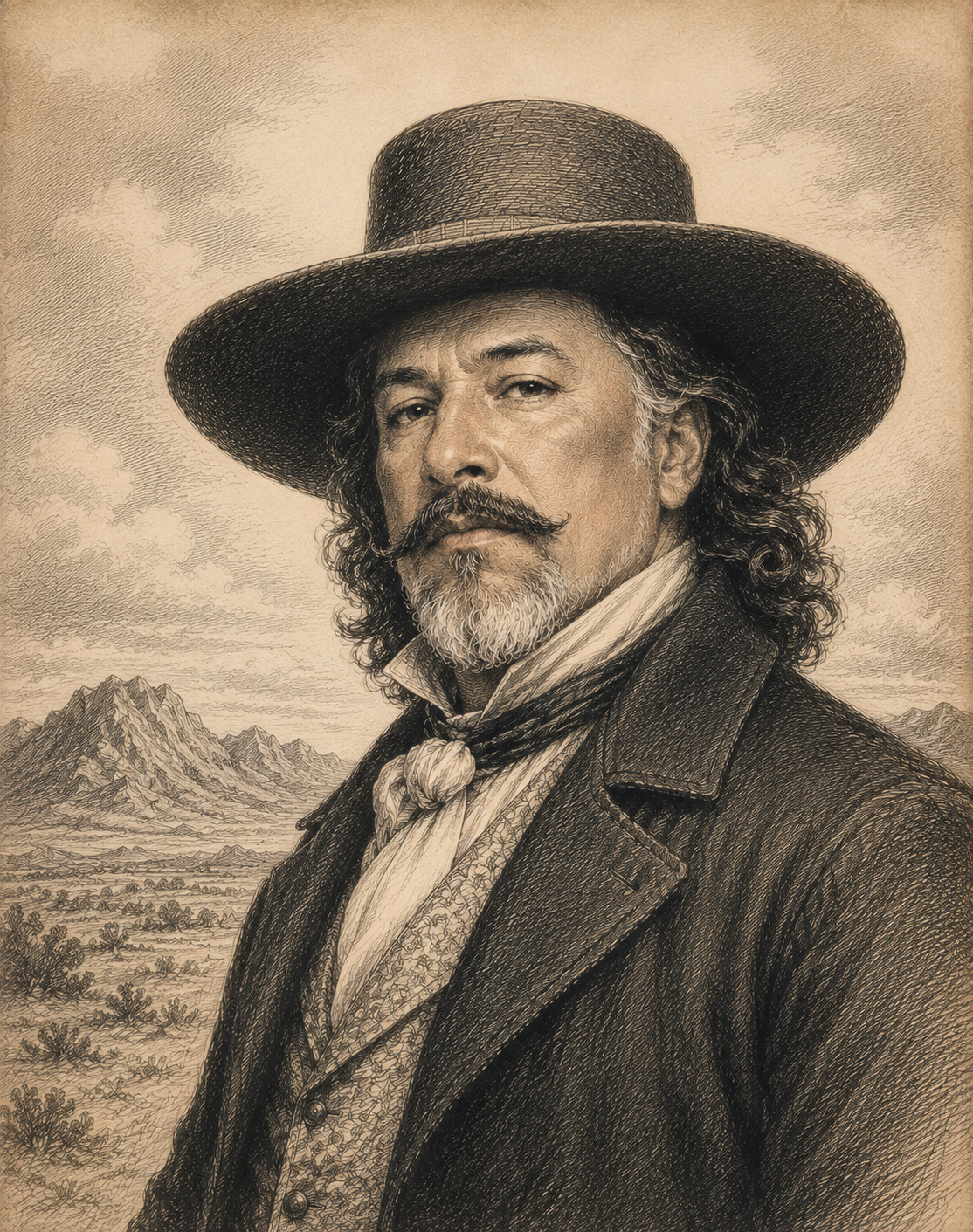
Historical artistic reconstruction. No authenticated lifetime portrait of Luis María Cabeza de Baca is currently known.
Don Luis María Cabeza de Baca · c. 1754–1827
A New Mexican rancher, father, and land claimant, Luis María sought legal title to the grazing country his family used near Las Vegas. The contest that followed him outlived the man himself—and rearranged a family’s future across the West.
“A claim may begin with one name. Its consequences belong to generations.”Read His Story ↗
Vegas Grandes · New Mexico
The Baca claim and the Las Vegas town grant converged upon the same ground. Congress answered the conflict not by erasing one history, but by translating it into five distant tracts.
Replacement locations selected by the heirs
New Mexico
Baca Location No. 1 · Approx. 99,289 acres
Northeastern New Mexico
Baca Location No. 2 · Approx. 99,289 acres
Southern Arizona
Baca Float No. 3 · Approx. 99,289 acres
Colorado
Luis María Baca Grant No. 4 · Approx. 99,289 acres
Northern Arizona
Baca Float No. 5 · Approx. 99,289 acres
Documents, testimony & the paper trail
History becomes tangible at the point where ink meets paper. Examine the record as a living case file.
Territorial record · Petition
Federal record · Survey map
United States Statutes · Law
Parish & family archives · Genealogy
An unsettled frontier account
Accounts connect a government search for contraband furs with the confrontation at Peña Blanca in which Luis María died. The record is fragmentary; this archive separates documented evidence from later retellings.
Open the Death FileFamily lines · 1827 to the present
The claim passed into the hands of heirs, attorneys, surveyors, courts, and Congress. Behind every transfer remained a family story—preserved in names, parish books, deeds, and memory.
Explore the Family Legacy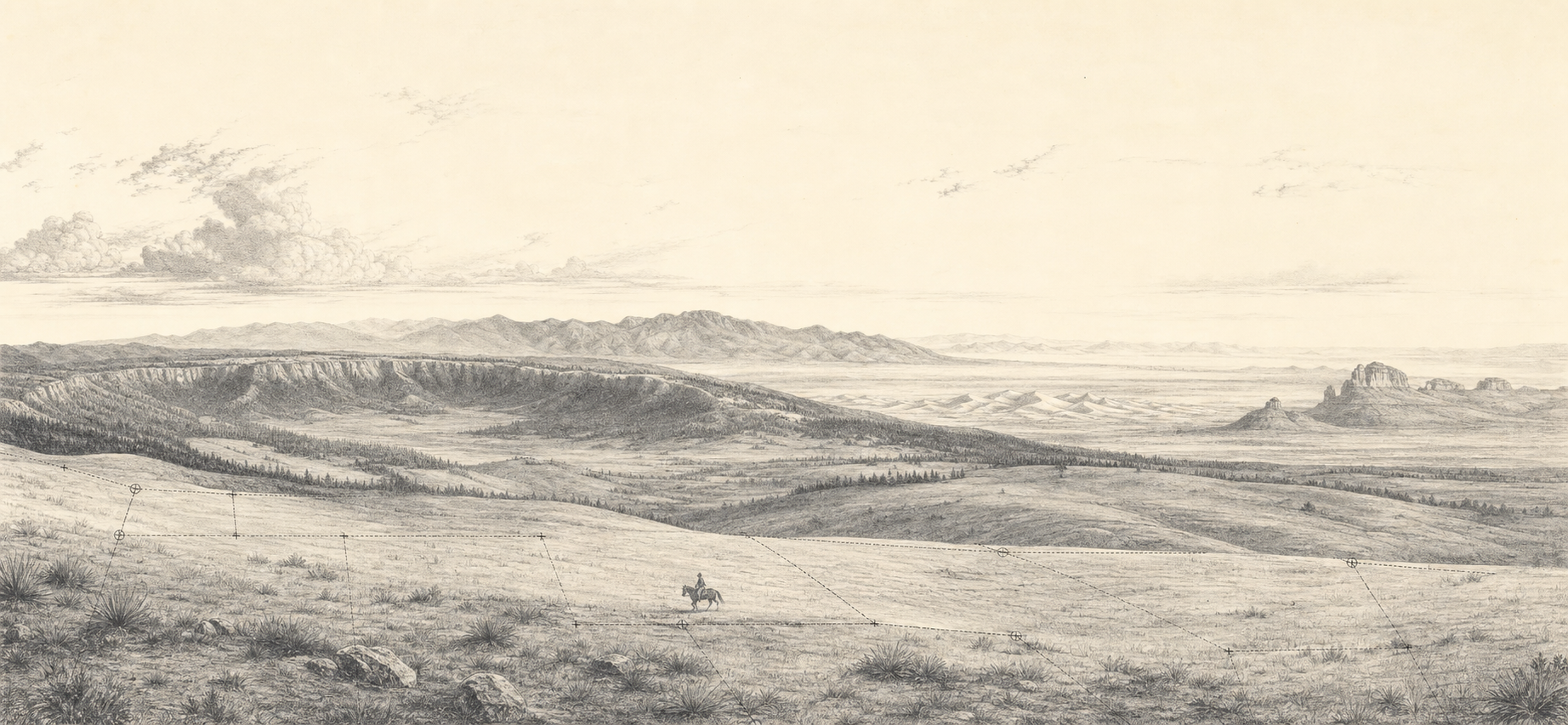
The modern landscape
From Valles Caldera to the San Luis Valley, a nineteenth-century claim became ranches, communities, court cases, public lands, and protected landscapes.